Deep Brain Stimulation (DBS)
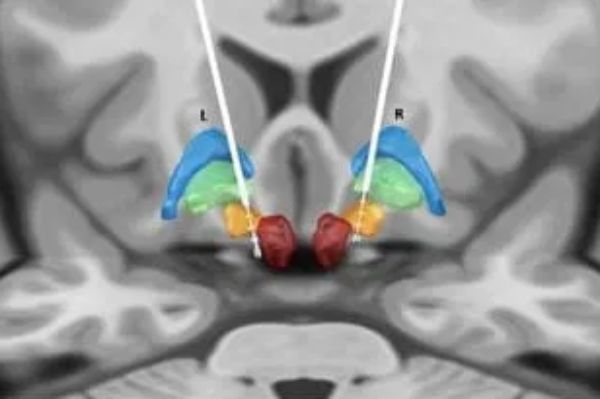
Our team has been performing continuous DBS procedures since 2019, accumulating substantial clinical and research expertise in the surgical and follow-up management of patients with movement disorders. Deep Brain Stimulation (DBS) is a neurosurgical procedure in which stimulating electrodes are implanted into selected deep brain structures and targets. The electrodes are connected to an implanted pulse generator, which delivers controlled electrical stimulation to modulate pathological neural circuit activity.
Despite ongoing investigation into the precise mechanisms underlying its efficacy, DBS has demonstrated robust clinical effectiveness in improving motor function across a range of movement disorders — including Parkinson’s disease (PD), essential tremor, and primary dystonia — as well as in epilepsy, chronic pain, and certain psychiatric conditions.
A core focus of our group’s work has been the longitudinal evaluation of subthalamic nucleus DBS (STN-DBS) in patients with PD. Beyond surgical implantation, we have developed a comprehensive follow-up framework that integrates clinical assessments, standardized neuropsychological testing, advanced neuroimaging, and blood-based biomarkers. This multimodal approach allows us to characterize not only the motor outcomes of STN-DBS, but also its effects on cognitive, emotional, and neurobiological domains over time, contributing to a more complete understanding of therapeutic efficacy and individual response variability.