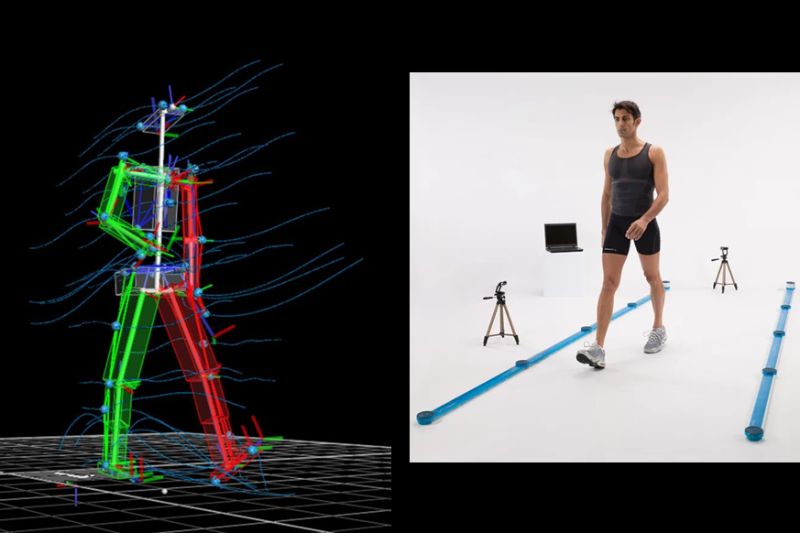
Our group employs a comprehensive and automated gait analysis framework designed to characterize kinematic and spatiotemporal parameters of locomotion with high precision. We utilize a multimodal instrumentation approach that integrates markerless motion capture (Contemplas), optical gait analysis (OptoGait), and wireless pressure-sensitive insoles for plantar footprint analysis. This combination allows for the simultaneous and non-invasive assessment of a wide range of gait parameters, including stride length, cadence, gait velocity, step symmetry, stance and swing phase durations, and plantar pressure distribution, without the burden of wearable markers or restrictive laboratory conditions.
This gait analysis pipeline has been applied to the detailed characterization of motor impairments in patients with Parkinson’s disease (PD) and Alzheimer’s disease (AD), among other neurological populations. In Parkinson’s disease, these assessments allow us to quantify hallmark gait disturbances such as shuffling gait, freezing of gait, and reduced arm swing, as well as to monitor the effects of pharmacological treatments, DBS, and neuromodulatory interventions on motor performance. In Alzheimer’s disease, gait analysis serves as a sensitive marker of motor-cognitive coupling, given the well-established relationship between gait deterioration and cognitive decline. The automated nature of this system enables reliable longitudinal follow-up, facilitating the tracking of disease progression and the evaluation of therapeutic outcomes over time.