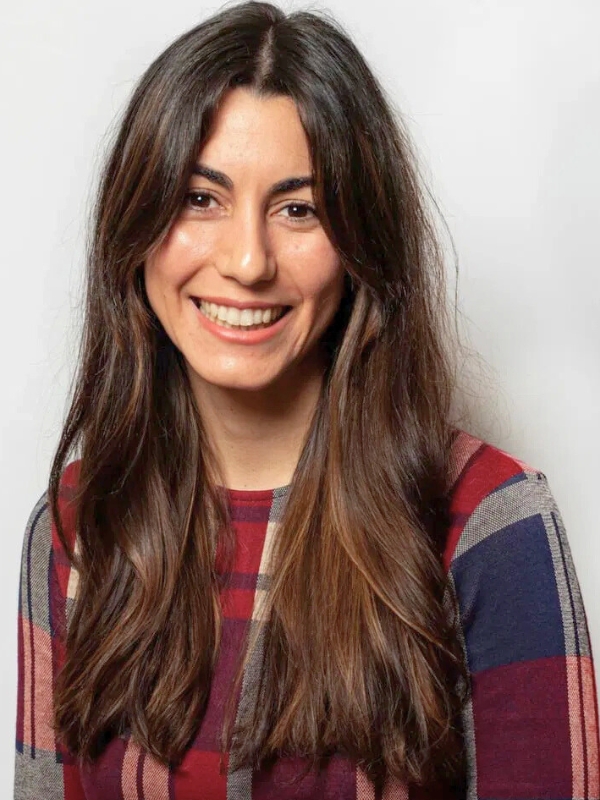
María Melcón is a postdoctoral researcher at the University of Cádiz, supported by a competitive Juan de la Cierva fellowship. She is an expert in electroencephalography (EEG) and the study of attentional and perceptual processes, with a strong background in cognitive neuroscience.
During her PhD at the Autonomous University of Madrid, she specialized in the analysis of neural oscillations and event-related potentials to investigate visuospatial attention and perception, combining advanced signal processing techniques with multivariate and computational approaches. Her work contributed to methodological and theoretical advances in understanding how ongoing brain dynamics shape conscious perception and attentional selection.
During her postdoctoral training abroad at the University of Glasgow, her research evolved toward a causal investigation of brain function by integrating EEG with transcranial magnetic stimulation (TMS). There, she worked on innovative multimodal paradigms (EEG–MEG and TMS–EEG), probing the functional relevance of oscillatory activity and large-scale brain networks underlying attention. This stage represented a key transition from correlational to causal neuroscience, strengthening her expertise in brain stimulation techniques and network-level interpretations of cognitive processes.
Currently, her research is oriented toward translational neuroscience, aiming to bridge basic cognitive research with clinical applications. At the University of Cádiz, she is developing projects focused on neurodegenerative disorders. On the one hand, she applies deep learning models to resting-state EEG data to identify biomarkers of Parkinson’s disease across different stages, with the goal of improving early diagnosis. On the other hand, she investigates the causal modulation of attentional deficits in early-onset Alzheimer’s disease using concurrent TMS–EEG, targeting frontoparietal networks to enhance visuospatial attention. Through this integrative and multimodal approach, her work seeks to advance mechanistic understanding while contributing to the development of personalized and non-invasive therapeutic strategies